


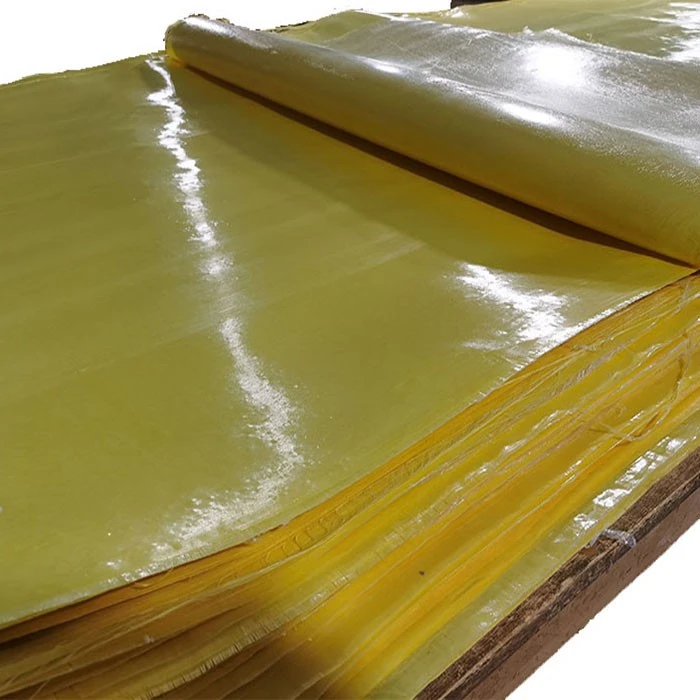
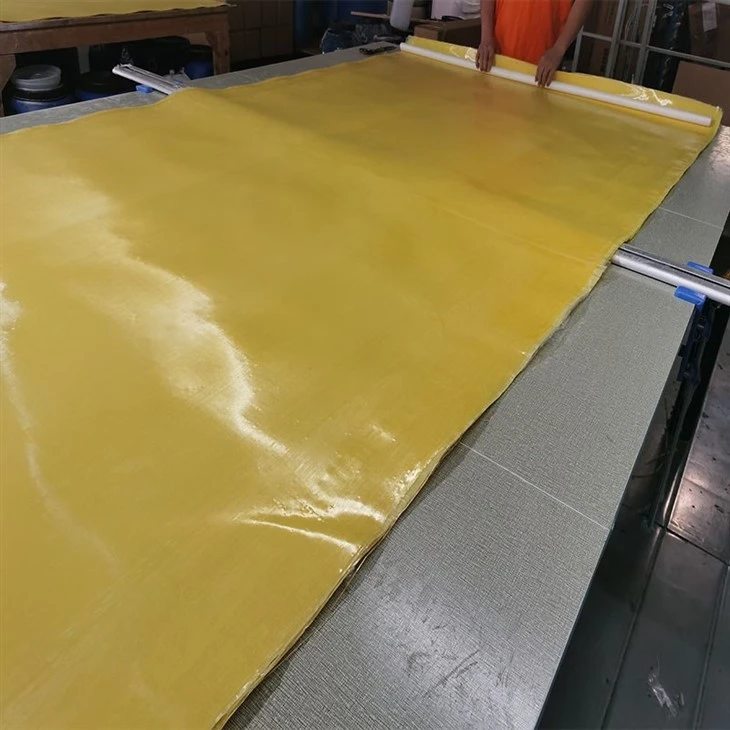
Name: High strength Para Aramid UD fabric
Material: para aramid
Square meter weight: 220g
Size: 3.2*1.6m(L*W)
Introductions of aramid UD:
Uni-Directional (UD) Aramid fabrics are used in a wide spectrum of ballistic protection applications. Such fabrics combine Aramid fibres in a flexible thermoplastic matrix that is capable of absorbing and dispersing high impact energy, such as energy from rifle shots. Four-ply fabric layers consist of fibre tapes cross-plied at 0°/90°/0°/90°, while two-ply fabric layers consist of fibre tapes cross-plied at 0°/90°.
The aramid fibre is lightweight and extraordinarily strong, with strength of 5 times more than steel on an equal-weight basis. The UD-aramid fabrics are commonly used in a wide range of Armour and anti stab solutions.
Characteristics:
High strength, high modulus and high dimensional stability
Excellent thermal protection, anti-cutting and chemical resistance
No melting point, non-flammable. Non-conductive
Good product formation, density, consistency and stability
Available for making yarn, hanging plastic and rubber, etc to meet various requirement.
Normal Specification: 220gsm
|
Type |
Aramid UD fabric |
|
Specification(L*W) |
3.2*1.6m |
|
Thickness |
0.23mm |
|
Areal density |
220G/M2 |
What is the para aramid?
Para Aramid fabric, also known as Kevlar fabric, is a strong and durable synthetic fabric made from aramid fibers. It has a high strength-to-weight ratio, making it a popular choice for applications where strength is required without adding weight. It is commonly used in protective clothing, body armor, sports equipment, and the aerospace and automotive industries due to its resistance to abrasion, cut, impact, and heat.
Good mechanical properties:
Aramid is a flexible polymer with higher breaking strength than ordinary polyester, cotton, nylon, etc., larger elongation, soft hand feel, and good spinnability. It can be produced into short fibers and filaments of different sizes and lengths. Generally, textile machinery makes different yarn counts into fabrics and non-woven fabrics, which are then finished to meet the requirements of protective clothing in different fields.